KYOTO GUIDE
The Perfect 1‑Day Kyoto Itinerary for First‑Timers
The Perfect 1‑Day Kyoto Itinerary for First‑Timers
Overview
One day in Kyoto is tight, but absolutely doable if you start early and route smartly. This itinerary covers the three areas that matter most for a first visit: Fushimi Inari at dawn, the Higashiyama walking district in the morning, and Gion in the evening. Expect around 15,000–18,000 steps. Use trains and taxis for transitions — avoid city buses during peak hours (9am–5pm on weekends and holidays).
This route works year-round. In cherry blossom season (late March–early April), start 30 minutes earlier everywhere to beat tour groups.
Timeline
06:00 — Fushimi Inari Taisha
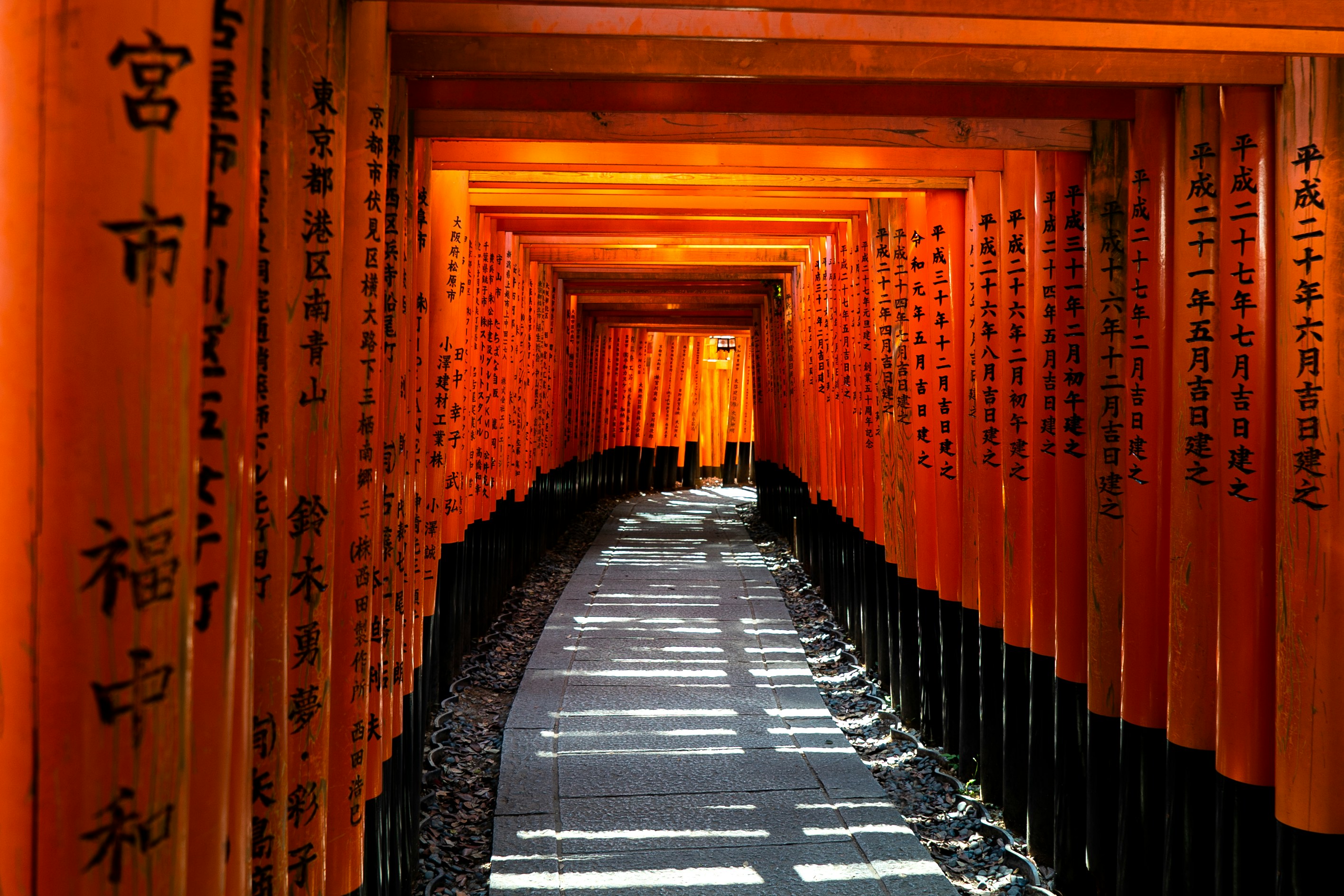
This is the single most time-sensitive move of the day. Fushimi Inari receives millions of visitors a year, but before 7am the torii tunnels are nearly empty. The pre-dawn light filtering through the vermilion gates is the image most people come to Kyoto for — and it’s only available to early risers.
What to do: Walk the lower mountain trails for 30–45 minutes. You don’t need to hike to the summit (allow 2–3 hours for the full loop). The densest and most photogenic gate tunnels are within the first 20 minutes of walking. Go as far as feels comfortable, then turn back.
Getting there: Take the JR Nara Line from Kyoto Station to Inari Station — the shrine is literally across the street. The first JR departure from Kyoto Station toward Nara leaves around 5:20am. Alternatively, the Keihan Main Line stops at Fushimi-Inari Station, a 5-minute walk from the shrine entrance.
Entry: Free, open 24 hours.
Skip: The small shops and stalls at the base don’t open until 9am or later — there’s nothing to buy at this hour, which is part of what makes it peaceful.
08:00 — Breakfast near Inari or Back Downtown
By 8am you’ll be back at the shrine base. A few options:
- Near Inari: Vending machine coffee and a convenience store onigiri from the 7-Eleven near Inari Station works perfectly as a quick breakfast before the next transit.
- Downtown (Kawaramachi area): If you have 30–40 minutes to spare, take the Keihan line north to Gion-Shijo Station and find a kissaten (traditional coffee shop) or bakery for a proper sit-down breakfast. Inoda Coffee has a classic Kyoto branch a short walk from Karasuma-Oike Station — it opens at 7am.
09:00 — Kiyomizu-dera → Sannenzaka → Ninenzaka → Yasaka Shrine
This stretch is the heart of the Higashiyama walking district and one of the most satisfying walks in Japan. Plan 2.5–3 hours to do it properly.
Getting there from Inari: Bus 207 from Tofukuji toward Kiyomizu-michi, or take a taxi (around ¥1,200–¥1,500). A taxi is worth it at this hour to avoid waiting.
Kiyomizu-dera (opens 6am, entry ¥500): The wooden stage jutting out from the main hall offers sweeping views over the eastern hills and city. The complex is large — the Jishu Shrine for romance, the three water streams (each grants a different wish), the Tainai-meguri (womb tunnel) are all worth seeing. Budget 60–75 minutes inside.
Sannenzaka and Ninenzaka: Walk downhill from Kiyomizu-dera through these beautifully preserved stone-paved lanes. This is where you’ll find the best concentration of traditional two-story machiya townhouses. The slope names mean “three-year slope” and “two-year slope” — legend says falling here brings two or three years of bad luck, so watch your step.
Ishibei-koji Lane: A short detour off the main Higashiyama path, this is one of Kyoto’s most atmospheric streets — narrow, lantern-lined, and largely free of souvenir shops. Worth the 5-minute detour.
Yasaka Shrine: At the bottom of Higashiyama, where the stone paths open into Maruyama Park. The shrine’s main gate (Nishi-romon) is a signature Kyoto image. Entry is free and it’s always open.
Photography notes: No tripods in the narrow lanes. Keep moving — stopping in the middle of Sannenzaka backs up foot traffic significantly. The best light on Ninenzaka is in the morning before the crowds build.
12:00 — Lunch in Higashiyama or Nishiki Market
You have two good options depending on energy and curiosity:
Stay in Higashiyama: The streets around Sannenzaka and Kiyamachi-dori have solid soba shops, tofu cuisine restaurants, and matcha sweets stalls. Look for set lunch menus (teishoku) — they’re better value than à la carte. Budget ¥1,200–¥1,800.
Head to Nishiki Market (a 15-minute walk or short taxi): Kyoto’s famous covered market street running off Shijo-dori. More than 100 stalls sell everything from fresh tofu to dried seafood to grilled skewers. Etiquette note: the market is not designed for eating while walking — pick a stall, eat standing at the counter or in the designated eating area, then move on. Good for a grazing lunch of small bites.
14:00 — Optional: North Kyoto Loop (Kinkaku-ji / Ryoan-ji)
If you have energy and it’s not a weekend, this is worth doing. If it’s a holiday or you’re starting to fade, skip it — the Kinkaku-ji grounds can feel like an airport terminal on busy days.
Kinkaku-ji (the Golden Pavilion): Entry ¥500. The gold-leaf temple reflected in the mirror pond is undeniably beautiful. The visit itself is brief — you follow a one-way path around the pond, take photos, and exit through the gift shop. Allow 45 minutes total including transit.
Ryoan-ji: 10 minutes by taxi from Kinkaku-ji. The famous rock garden is minimalist — 15 rocks arranged in white gravel — and genuinely thought-provoking if you give it time. Arrive expecting a meditative experience, not visual spectacle. Budget 45–60 minutes.
Transit: Use taxis between these two sites. A bus is possible but slow.
If you skip the north loop: Use the afternoon for a second café stop, shopping on Shijo-dori, or a brief visit to Nijo Castle (easily reachable by subway, entry ¥1,000, genuinely interesting for the squeaking nightingale floors and painted screen rooms).
16:00 — Rest and Reset
This is a deliberate pause, not optional filler. Fifteen to eighteen thousand steps across uneven stone and temple staircases is genuinely tiring. Return to your hotel or find a quiet café. Change shoes if you can. A 30–60 minute break before the evening makes a real difference in how much you enjoy Gion after dark.
18:00 — Gion and Yasaka at Night
Gion is best in the evening, when the day-trippers have headed to the station and the lanterns along Hanamikoji and Shirakawa Canal light up. This is the Kyoto that most visitors photograph from tour buses but never actually walk through slowly.
What to do: Start at Yasaka Shrine (free, atmospheric at night) then walk south down Hanamikoji Street — this is Kyoto’s most famous geisha district street, lined with ochaya (teahouses) where geiko and maiko entertain private clients. You may spot one hurrying between engagements in the early evening. Do not photograph, call out to, or follow them.
Shirakawa Canal area: A 5-minute walk east of Hanamikoji. The narrow canal bordered by cherry trees (spectacular in spring) and traditional buildings is less crowded than Hanamikoji and equally beautiful at night.
Dinner options: Pontocho — a narrow lantern-lit alley one block from the Kamo River — is one of Kyoto’s finest dining streets. Restaurants range from ¥2,000 ramen counters to ¥15,000 kaiseki kaiseki courses. Walk the whole alley first to get a sense of the menus and prices, then choose. Booking ahead for sit-down restaurants is recommended for weekends.
Rain Plan
Kyoto in rain is often beautiful — temple gardens look especially lush, and the crowds are thinner. The main adjustment is skipping the Fushimi Inari mountain hike (slippery stone paths) and the exposed Kiyomizu-dera stage walk.
Rainy-day substitutions:
- Replace the Fushimi Inari hike with the covered Nishiki Market in the morning.
- Replace the Kiyomizu-dera walk with Nijo Castle (largely covered interior, excellent painted screens).
- Kyoto National Museum (near Higashiyama) is an excellent choice on wet days — the permanent collection covers temple art, ceramics, and textiles.
- The covered Teramachi and Shinkyogoku shopping arcades near Kawaramachi offer hours of browsing without getting wet.
Even in rain, Gion in the evening is worth the umbrella. The reflections on wet stone lanes are striking.
Transport Cheatsheet
| Leg | Recommended Option | Approximate Cost |
|---|---|---|
| Hotel → Fushimi Inari | JR Nara Line from Kyoto Station | ¥150 |
| Inari → Kiyomizu-michi | Taxi | ¥1,200–¥1,500 |
| Higashiyama → Nishiki Market | Walk (15 min) or taxi | ¥0–¥800 |
| Downtown → Kinkaku-ji | Bus 205 or taxi | ¥230–¥1,500 |
| Kinkaku-ji → Ryoan-ji | Taxi | ¥800 |
| Hotel → Gion | Subway (Karasuma line to Shijo, walk east) | ¥210 |
Load your IC card (ICOCA, Suica, or PASMO) at any station machine before you start. Tap in and out — it works on JR, Subway, Keihan, and Hankyu.
Google Maps is reliable for transit directions in Kyoto. For trains and buses, Navitime Japan is more detailed. Set departure time to “now” rather than “arrival by” for more accurate real-time routing.
Budget
| Item | Cost |
|---|---|
| Fushimi Inari entry | Free |
| Kiyomizu-dera entry | ¥500 |
| Kinkaku-ji entry (optional) | ¥500 |
| Ryoan-ji entry (optional) | ¥600 |
| Breakfast | ¥400–¥800 |
| Lunch | ¥1,200–¥1,800 |
| Dinner | ¥2,000–¥4,000 |
| Transit (all day) | ¥900–¥1,400 |
| Total | ¥6,100–¥9,600 (without optional entries or experiences) |
Mid-range with all optional sights and a decent dinner runs ¥10,000–¥14,000 per person.
Book a Local Experience
The best way to end your one day in Kyoto is with someone who actually knows the neighborhood. Our Kyoto Gion Night Walk: Sake, Hidden Gems & Geisha takes small groups through the backstreets and hidden izakaya of the geisha district — places you’d never find from a guidebook or map. You’ll taste three to four local sake varieties selected by a knowledgeable guide, hear real stories about the geiko district and its history, and walk away with a genuine understanding of what makes this part of Kyoto special. It runs in the evening, which makes it the natural way to close out a day that started before sunrise at Fushimi Inari.
Tips
- Start before 6:30am. The difference between arriving at Fushimi Inari at 6am versus 9am is the difference between a personal experience and a crowd event. Set the alarm.
- Wear comfortable shoes. Sannenzaka and Ninenzaka are stone-paved and uneven. Good walking shoes matter more than aesthetics here.
- Carry cash. Smaller temples, market stalls, and coin lockers require it. Keep ¥3,000 on you at all times.
- One major area per half-day. Higashiyama in the morning, central Kyoto or north in the afternoon, Gion in the evening. Resist the urge to cram in more — the spaces between sights are part of the experience.
- Skip the rickshaw tours along Sannenzaka. They block the narrow lanes for everyone else, and you see more on foot anyway.
- Respect the geiko district rules. No photographs of people who haven’t consented. No following geiko into alleys. No loud conversation outside ochaya. These aren’t tourist suggestions — they’re what allows Gion to function as a living working neighborhood.
FAQs
Can I squeeze Arashiyama into this itinerary? Not comfortably. Arashiyama is 30–40 minutes from central Kyoto and deserves at least half a day. Save it for Day 2, or cut either the north loop or the morning Higashiyama walk. Trying to do both in one day means rushing everything.
What’s the best spot for sunset? Kiyomizu-dera’s stage faces west and northwest — if you time your visit for late afternoon, the light is excellent. Shogunzuka (accessible by taxi up the eastern hills) offers panoramic views of the entire city at dusk, but requires a taxi both ways.
Is luggage storage available? Yes. Kyoto Station has coin lockers in multiple sizes near each exit (¥400–¥900/day). Most hotels will store luggage after checkout. If you’re arriving early before check-in, leave bags at the hotel and start the Fushimi Inari run immediately.
How do I handle the day if I’m not a morning person? Shift the Fushimi Inari visit to an evening instead — it’s open 24 hours and atmospheric at night with the lanterns lit. Start your day with Kiyomizu-dera at opening (6am) or 9am if you accept the crowds, then work through Higashiyama and end in Gion as planned.
// KYOTO LOCAL EXPERIENCE
EXPLORE KYOTO
WITH A LOCAL GUIDE
Skip the crowds and see the Kyoto most visitors never find. Small-group tours led by local experts — built around genuine stories, hidden spots, and real connections with the city.
Local guide based in Gion, Kyoto. Leading intimate walking tours and sake experiences since 2018. Passionate about connecting travelers with authentic Kyoto culture.