KYOTO GUIDE
Where to Stay in Kyoto: Best Areas for First‑Timers
Where to Stay in Kyoto: Best Areas for First‑Timers
Choosing where to stay in Kyoto can feel overwhelming — the city has dozens of distinct neighborhoods, accommodation styles ranging from ultra-modern capsule hotels to centuries-old ryokan, and wildly different vibes depending on which side of the Kamo River you sleep on. This guide breaks down the four main areas that work best for first-time visitors, with honest assessments of the trade-offs for each.
Quick Picks
| Area | Why stay | Watch‑outs | Good for |
|---|---|---|---|
| Gion/Higashiyama | Historic lanes, evening walks, ryokan atmosphere | Crowds until 6pm, steep stairs, limited wheelchair access | Couples, culture lovers, first-timers who want the “Kyoto feeling” |
| Downtown (Kawaramachi/Karasuma) | Best dining, transit hub, modern comforts | Busy and noisy streets, less traditional atmosphere | Foodies, shoppers, families, those visiting multiple cities |
| Kyoto Station | Widest hotel inventory, JR/Shinkansen access, easiest arrivals | Less charming, 15–20 min bus to main sights | Day-trippers to Nara/Osaka, budget travelers, light packers |
| Arashiyama | Serene river views, nature immersion, premium ryokan | 30–50 min to central sights, limited dining options | Slow travelers, repeat visitors, romantic escapes |
Gion & Higashiyama
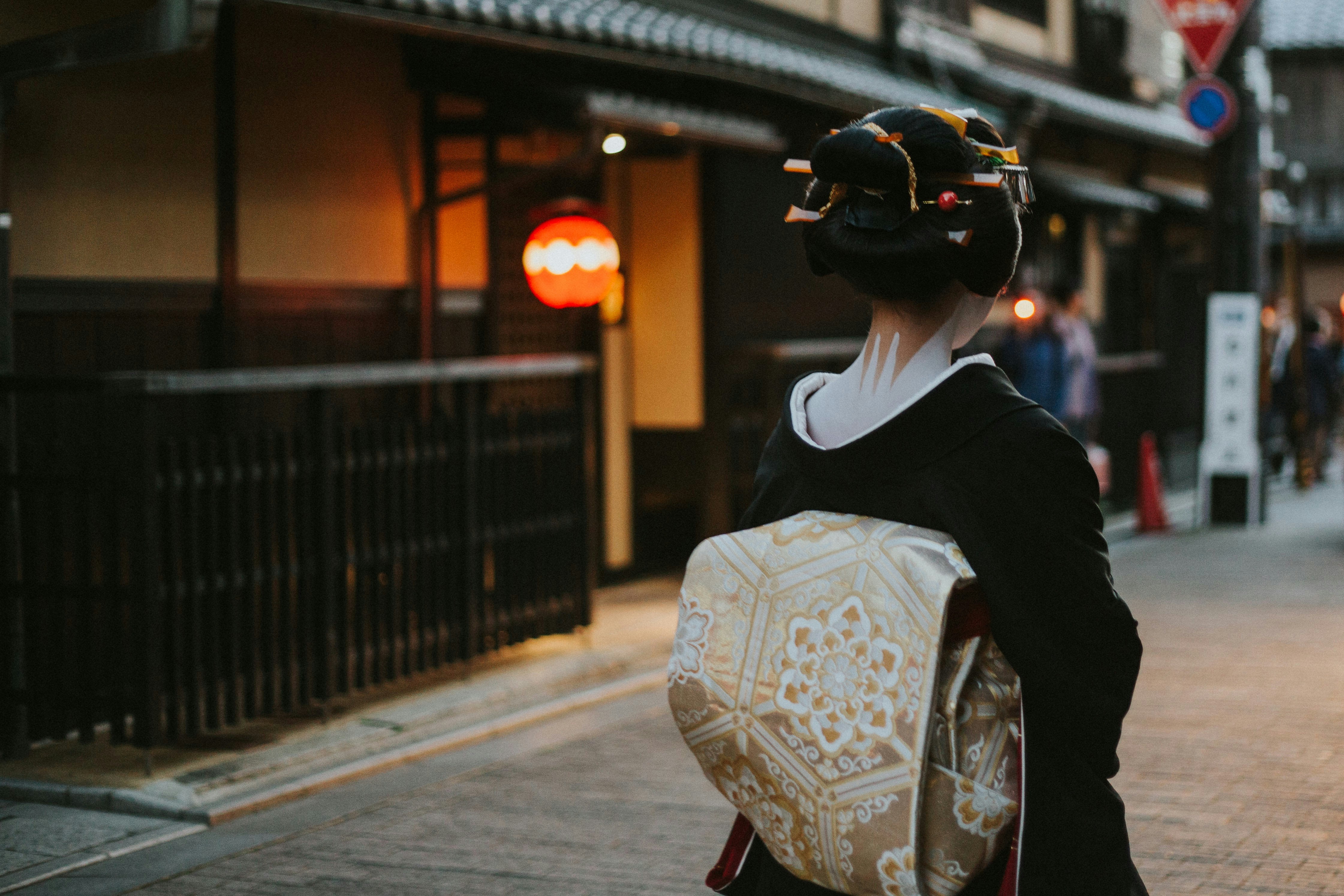
For most first-time visitors, Gion and Higashiyama deliver the quintessential Kyoto experience: stone-paved lanes (hanamikoji, Ninenzaka, Sannenzaka) lined with wooden machiya townhouses, lanterns glowing at dusk, the distant clang of a temple bell. It is the neighborhood where the postcard version of Kyoto actually exists — and staying here means you can experience it before and after the day-trip crowds arrive.
Accommodation types and prices:
- Ryokan (traditional inns): typically ¥15,000–¥50,000 per person per night, usually including a multi-course dinner and breakfast. The higher end includes private onsen baths and full kaiseki dining.
- Machiya (townhouse) rentals: sleep 2–8 guests and run ¥20,000–¥60,000 per night for the whole property. A great option for groups or families who want a kitchen and more privacy.
- Boutique Western hotels and small inns: ¥12,000–¥25,000 per room per night, breakfast sometimes optional.
What you can walk to: Kiyomizu-dera Temple, Yasaka Shrine, Chion-in, Shoren-in, Maruyama Park, and the entire Higashiyama walking trail are all within 15–20 minutes on foot. For destinations farther afield, buses and taxis are plentiful on Higashiyama-dori.
Things to know: Tour groups dominate the main lanes from around 10am to 6pm. After 8pm, the streets are quiet and beautiful. If you are a light sleeper and staying near Shijo-dori, street noise on weekends can be significant until midnight. Stone steps and uneven cobblestone paths make wheelchair and stroller navigation difficult in much of this area.
Downtown (Kawaramachi/Karasuma)
Downtown Kyoto — roughly the area between Kawaramachi Station to the east, Karasuma Station to the west, and spanning from Shijo-dori north to Oike-dori — is the city’s transit and commercial heart. If Gion is about atmosphere, downtown is about efficiency.
Accommodation types and prices:
- Modern business hotels and international chain hotels run ¥8,000–¥20,000 per room per night, with breakfast typically sold separately.
- Budget hostels and guesthouses are available from ¥3,000–¥5,000 per night per person.
- Serviced apartments and larger rooms are available for families.
What you can walk to: Nishiki Market (Kyoto’s famous covered food market), Teramachi and Shinkyogoku shopping arcades, Pontocho alley (restaurant row along the river), and dozens of independent restaurants and cafes are all within easy walking distance. This area also has excellent access to the Subway Karasuma Line and Keihan Line, making it the best neighborhood for reaching multiple destinations without relying on buses.
Things to know: This is Kyoto’s busiest commercial zone, so street noise, foot traffic, and the pace of the area are noticeably urban. It suits business travelers, families who need space and convenience, and anyone who wants to maximize their time rather than their atmosphere. Many of Japan’s best ramen, izakaya, and kaiseki restaurants are concentrated in this area.
Kyoto Station Area
Kyoto Station is not glamorous, but it works. The station itself is an architectural landmark — a vast glass-and-steel structure housing department stores (Isetan), two underground shopping malls (The Cube and Porta), dozens of restaurants, and seamless connections to JR Shinkansen, JR local lines, subway, and most major bus routes.
Accommodation types and prices:
- The widest range of any area in Kyoto: from budget business hotels at ¥6,000 per night to full-service international hotels at ¥25,000+.
- Multiple hotel towers are clustered within a 5-minute walk of the station, making luggage logistics simple.
What you can walk to: The station area itself has Toji Temple (a UNESCO World Heritage site famous for its five-story pagoda) within walking distance, and Fushimi Inari-Taisha is just two stops south by JR. The rest of central Kyoto is 15–20 minutes by bus or 10–15 minutes by subway.
Things to know: Luggage forwarding services (takuhaibin, described below) are extremely easy to use at Kyoto Station, making it a smart first or last night if you are arriving from or continuing to another city. The area is best suited to travelers making day trips to Nara (35 min by JR) or Osaka (15 min by Shinkansen, 75 min by JR Rapid), as the station is the launchpad for all regional travel.
Arashiyama
Arashiyama sits at the western edge of Kyoto where the city meets forested mountains and the broad Oi River. It is home to the famous bamboo grove, Tenryu-ji’s garden (a UNESCO World Heritage site), monkey park, and several riverside ryokan with some of the most beautiful views in Japan.
Accommodation types and prices:
- This area is dominated by high-end ryokan with river or mountain views: ¥20,000–¥80,000 per person per night, dinner and breakfast included.
- A handful of guesthouses and mid-range hotels are available at ¥8,000–¥15,000 per night, though options are limited.
What you can walk to: The bamboo grove, Tenryu-ji, Jojakko-ji, Okochi Sanso villa, and the riverside promenade are all within easy walking distance from accommodations in this area. The main street has good restaurants and food stalls.
Things to know: From Arashiyama, central Kyoto sights take 30–50 minutes to reach by train (JR Sagano Line to Kyoto Station, or Randen/Hankyu to Kawaramachi). Plan your Arashiyama stay for days you intend to spend mostly in the western part of the city. Cherry blossom season and autumn foliage peak are the most popular times to stay here — book at least three to four months in advance, as river-view ryokan rooms sell out almost immediately when popular travel dates open.
Practical Booking Tips
Book early for peak seasons. For April (cherry blossoms) and November (autumn foliage), start looking three to four months in advance — ideally more. Ryokan and machiya rooms sell out fastest. Budget hotels in the Kyoto Station area tend to have more availability but still rise sharply in price as peak dates approach.
Understand ryokan pricing. Ryokan rates in Japan are typically quoted per person, not per room, and often include dinner and breakfast. Confirm what is included before booking. A ¥20,000 per person rate that includes kaiseki dinner and breakfast can represent better value than a ¥12,000 hotel room with no meals.
Check cancellation policies carefully. Peak-season ryokan often enforce strict cancellation penalties (50–100% charge within 7–30 days of arrival). Read the fine print before confirming.
Use luggage forwarding (takuhaibin). One of Japan’s most convenient services: drop your suitcase at a convenience store or hotel front desk, pay ¥1,000–¥1,500 per bag, and it arrives at your next hotel the following day. This makes multi-destination trips — or staying in a machiya without elevator access — completely manageable.
For transit logic, see our Getting Around Kyoto guide — it explains which bus routes, subway lines, and IC card options work best from each area.
Read Next
For help planning your days, see the 1-Day Kyoto Itinerary and the Kyoto First-Timer Guide.
// KYOTO LOCAL EXPERIENCE
EXPLORE KYOTO
WITH A LOCAL GUIDE
Skip the crowds and see the Kyoto most visitors never find. Small-group tours led by local experts — built around genuine stories, hidden spots, and real connections with the city.
Local guide based in Gion, Kyoto. Leading intimate walking tours and sake experiences since 2018. Passionate about connecting travelers with authentic Kyoto culture.