ITINERARIES
Rainy Day in Kyoto: Best Things to Do Indoors
Rainy Day in Kyoto: Best Things to Do Indoors
Rain and Kyoto: It’s Not Always Bad
Kyoto gets around 1,500mm of rainfall annually — more than London. Rain is part of the experience. The question is how to work with it rather than against it.
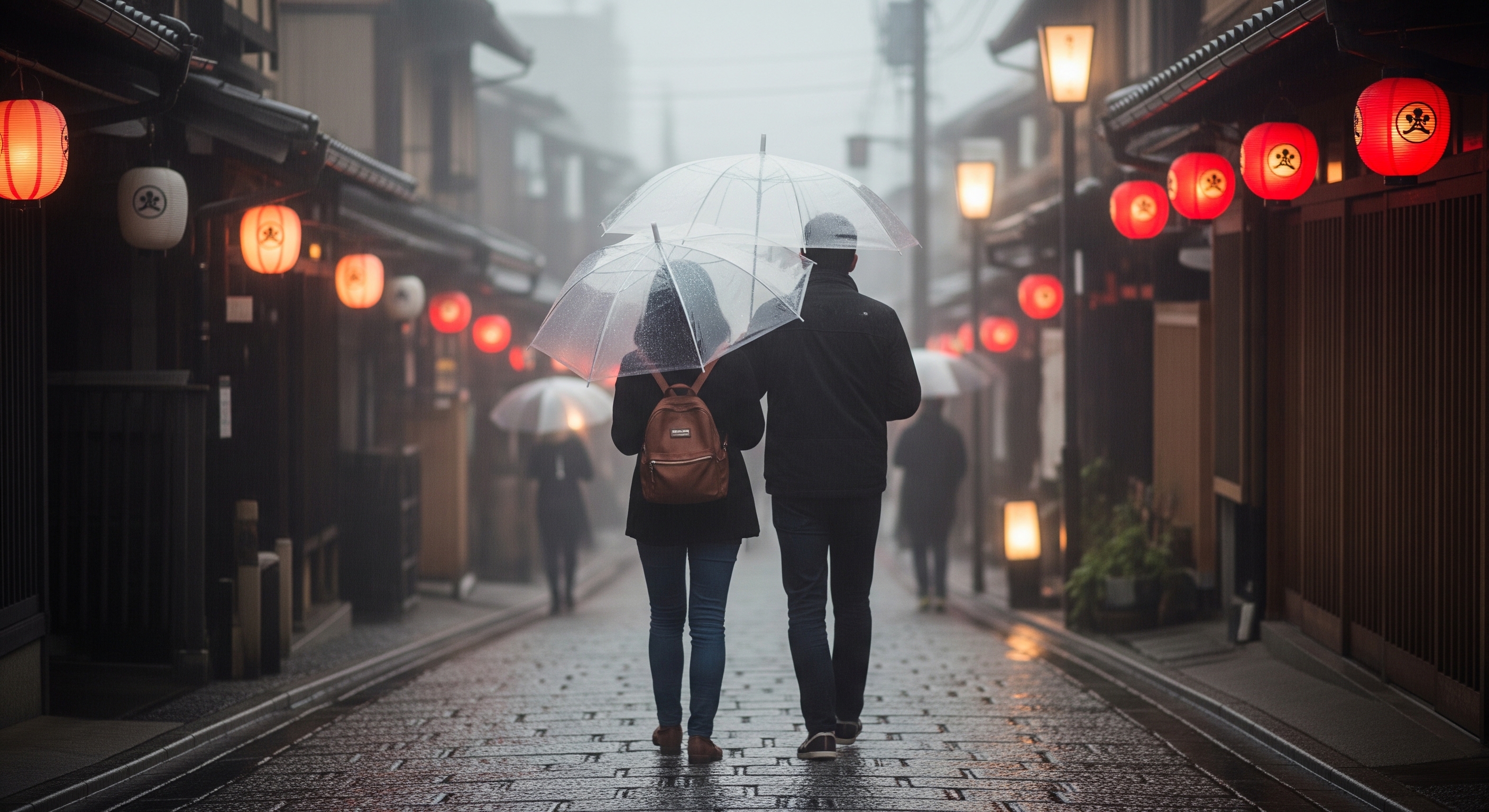
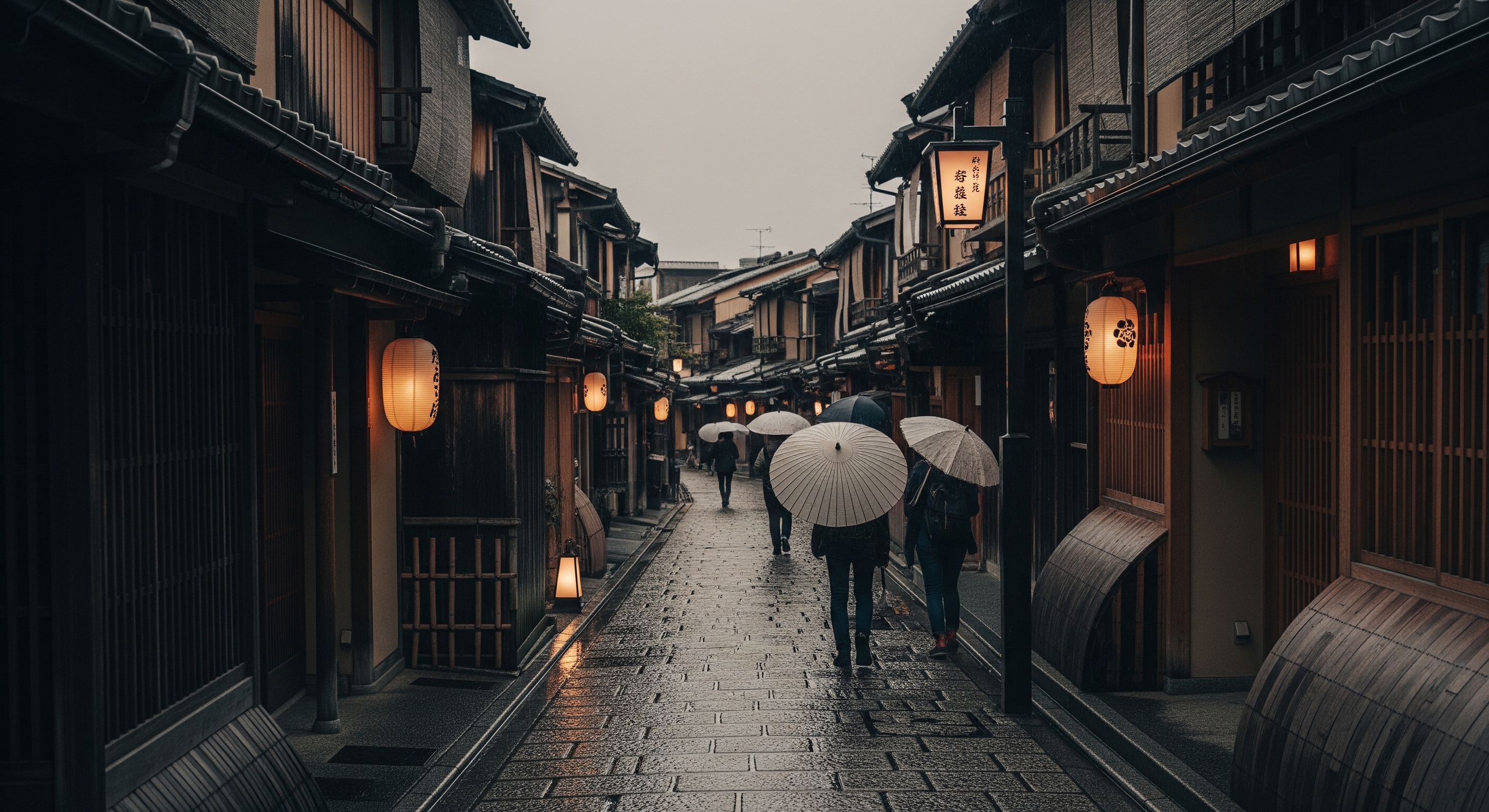
Some Kyoto sights improve in rain. Zen rock gardens, seen from a covered pavilion with rain falling around you, are exactly as they were meant to be experienced. Moss gardens glisten. The bamboo grove in light rain muffles sound and clears the path of fair-weather visitors. The old stone lanes of Higashiyama take on an atmospheric quality under gray skies that midday sunshine doesn’t create.
Heavy rain is a different matter — slippery mountain paths, reduced visibility, and the practical difficulty of managing an umbrella while photographing. On heavy rain days, lean fully into the covered and indoor options.
 HIGASHIYAMA
 Sights That Are Better in Rain
Ryoan-ji Rock Garden
Ryoan-ji’s stone garden — 15 rocks arranged in white gravel, traditionally viewed from the covered wooden veranda — is one of the few places in Kyoto designed to be experienced from a sheltered position regardless of weather. Rain falling on the gravel and creating patterns around the stones adds to rather than detracts from the experience. ¥600. The garden is never crowded in rain.
Rain keeps visitors away — one of the few times you may have the veranda nearly to yourself
Arashiyama Bamboo Grove
Light rain drops the crowd level dramatically and creates mist in the upper canopy. The hollow resonance of rain on bamboo is on UNESCO’s list of Japan’s protected soundscapes for a reason. Wear waterproof shoes — the path gets wet. Heavy rain makes this less appealing.
Significantly fewer visitors than fair-weather days; mist adds atmosphere
Arrive at the bamboo grove before 9am on a rainy day and you may have the path almost entirely to yourself. The combination of mist and empty lanes is genuinely special.
Fushimi Inari (Lower Tunnels Only)
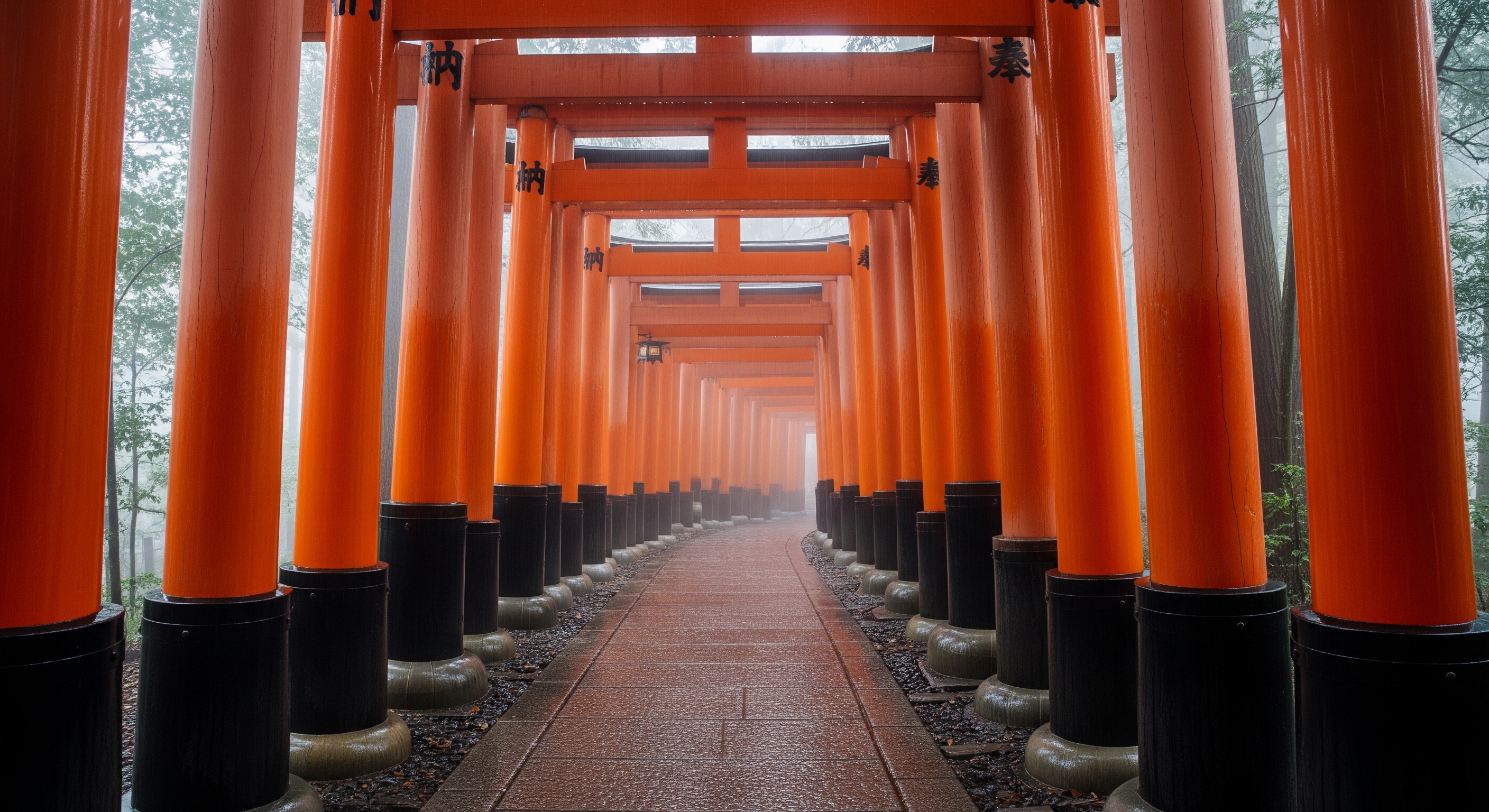
Light rain at Fushimi Inari is atmospheric — empty tunnels, mist on the mountain, vermilion gates deepened in color when wet. Stick to the lower paved sections; the upper mountain paths become slippery and the forest drips heavily onto the trail.
 FUSHIMI INARI
 The upper mountain paths at Fushimi Inari become slippery and the tree canopy drips continuously in heavy rain. On heavy rain days, stay on the lower paved loop only — the upper summit is not worth the risk.
Saiho-ji (Moss Temple)
One of Kyoto’s most extraordinary gardens — completely carpeted in over 120 varieties of moss. Requires advance reservation by postcard or email (¥3,000+). Rain is the ideal visiting condition: moss needs moisture to glow. This is legitimately one of the best rainy-day activities in Japan.
Saiho-ji requires advance booking by postcard or email — you cannot simply show up. Book several weeks ahead, especially for rainy season (June–July). The ¥3,000+ fee includes a sutra-copying session before the garden walk.
Covered and Indoor Options
The covered 400-meter arcade is ideal in rain — browse pickle stalls, sample tofu, eat tamagoyaki on a stick, and stay completely dry. See the Nishiki Market guide.
The covered arcade running along Teramachi Street has a mix of traditional shops (fans, washi paper, tea), restaurants, and bookstores. The northern extension (toward Imadegawa) has more local character. Completely covered and walkable for hours.
Located in Higashiyama near Sanjusangendo, the Kyoto National Museum holds one of Japan’s finest collections of Buddhist art, decorative arts, and historic artifacts. The Meiji-era main building and the 2014 Heiseichishinkan gallery together cover Japanese art history with exceptional depth. Check for special exhibitions.
An ideal rainy-day activity — a seated, sheltered, inherently contemplative experience. Several venues in central Kyoto offer 45–90 minute tea ceremony experiences for tourists. See the Kyoto Tea Ceremony guide. Book in advance.
The brewery district in Fushimi is covered by the experience infrastructure of Gekkeikan Museum and Kizakura — both have indoor exhibitions and tastings. See the Sake in Kyoto guide.
Manga Museum (Kyoto International Manga Museum)
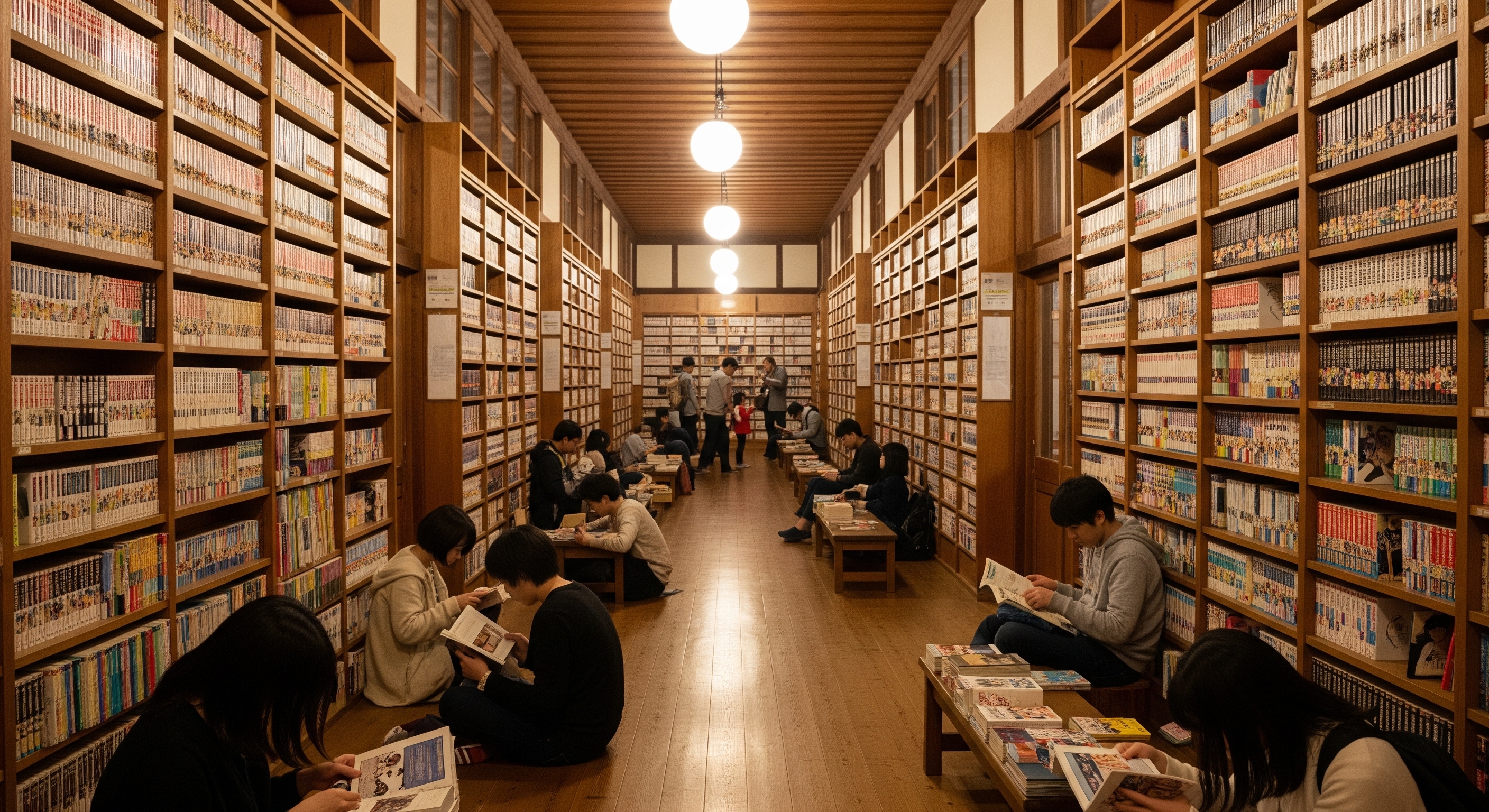
An unusual but excellent option: a former elementary school turned manga library with over 300,000 volumes. All ages. ¥900. Located near Karasuma-Oike subway. Genuinely comfortable for hours of browsing.
 MANGA MUSEUM
 Practical Rain Tips
Shake your umbrella before entering any building. Most entrances have umbrella stands (kasa-ire) or plastic umbrella bags (kasa-bukuro) — always use them. Dripping umbrellas through a shop or museum is considered rude.
Stone-paved lanes (Sannenzaka, Ninenzaka) become extremely slippery when wet. Walk carefully and avoid rushing. Rubber-soled shoes are essential — avoid leather soles entirely on wet stone.
Overcast skies eliminate harsh shadows and create even, diffused light — actually better for most architectural photography than bright sunshine. Wet stone and lacquerwork reflect beautifully. Don’t put your camera away just because it’s raining.
Rain makes taxis genuinely harder to find on the street. Use taxi apps (S.RIDE, DiDi) or have your hotel call one. Major taxi stands at Kyoto Station and Shijo-Kawaramachi are your best bet if you don’t have an app.
 RYOAN-JI
 Planning around rain? The 3-Day Kyoto Itinerary builds in flexibility. What to eat in Kyoto includes excellent rainy-day dining options.
Evening with a local guide: Our Gion Sake Walk runs in light rain — Gion under lanterns and drizzle is genuinely atmospheric.
// KYOTO LOCAL EXPERIENCE
EXPLORE KYOTO
WITH A LOCAL GUIDE
Skip the crowds and see the Kyoto most visitors never find. Small-group tours led by local experts — built around genuine stories, hidden spots, and real connections with the city.
FAQ
What is the rainiest time of year in Kyoto? ▼
Are there good things to do in Kyoto when it rains? ▼
Should I visit Fushimi Inari in the rain? ▼
Where can I buy an umbrella in Kyoto if I'm caught in rain? ▼
RELATED GUIDES
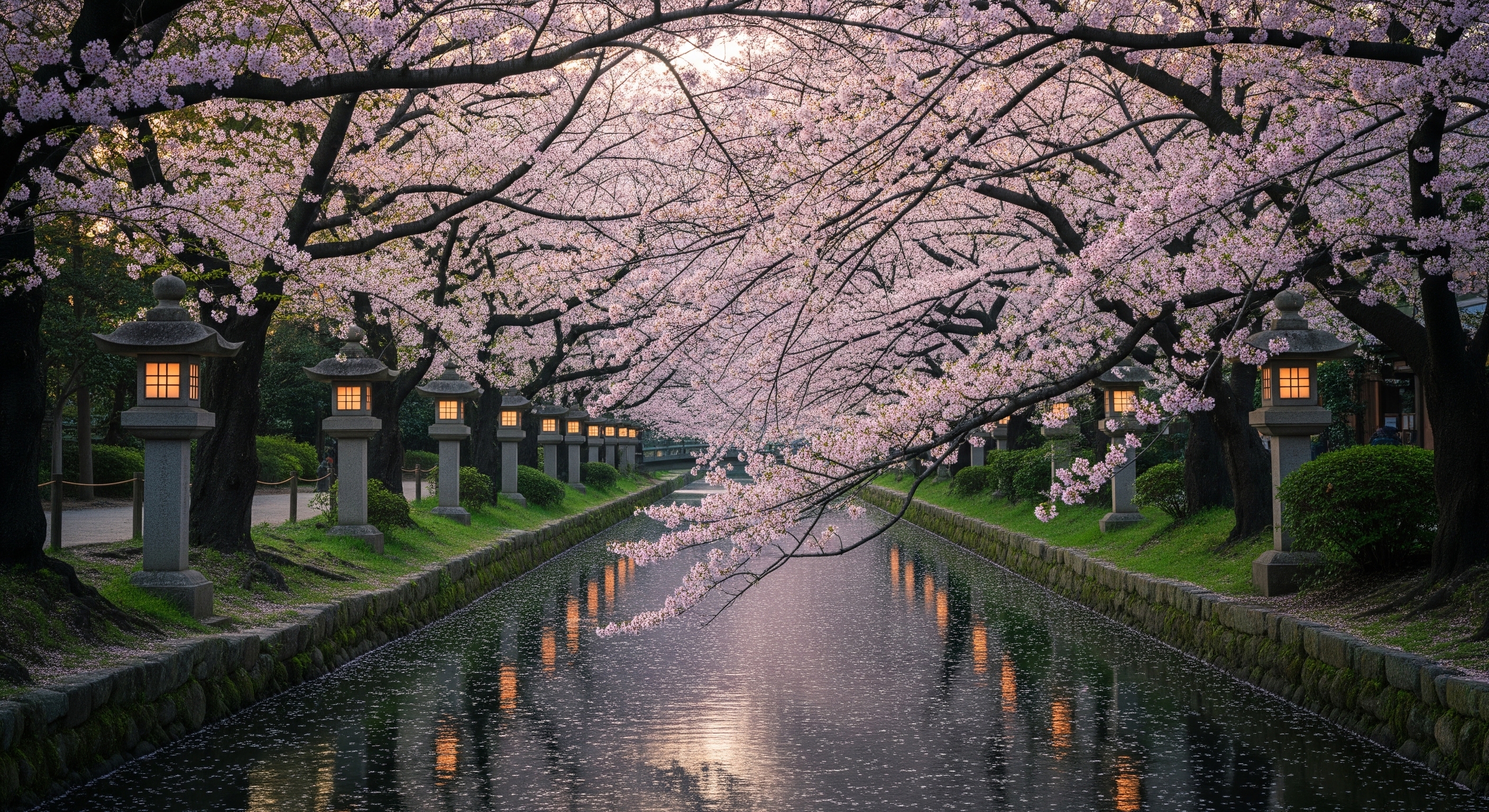
2 Days in Kyoto: The Best Weekend Itinerary
A realistic 2-day Kyoto itinerary that covers the highlights without rushing: Fushimi Inari, Higashiyama, Gion, Arashiyama, and Kinkaku-ji with transit times and food stops.
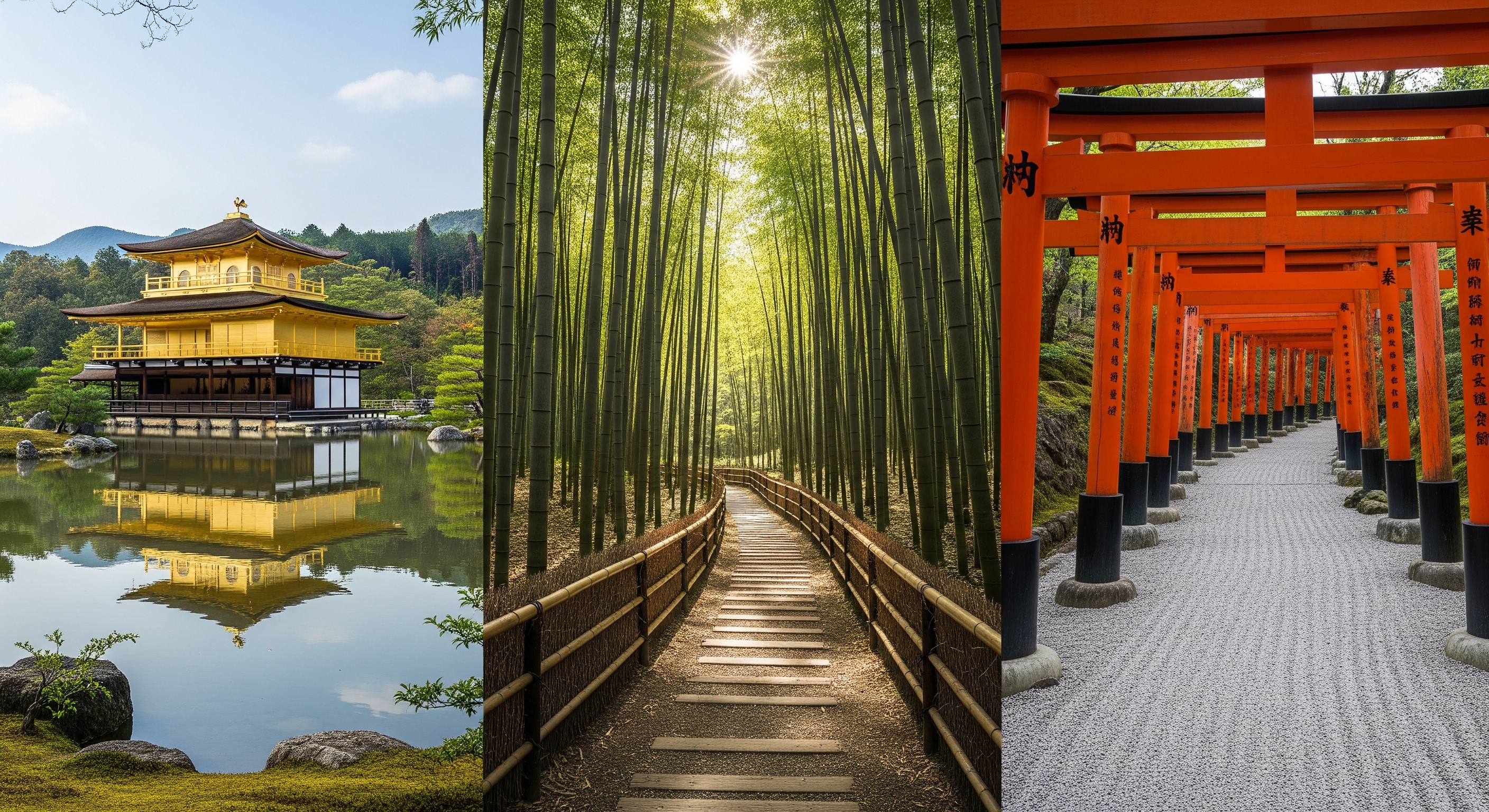
3 Days in Kyoto: Complete First-Timer Itinerary
The ideal 3-day Kyoto itinerary for first-time visitors: day-by-day plans for eastern, western, and northern Kyoto with practical transit tips and the right pace.
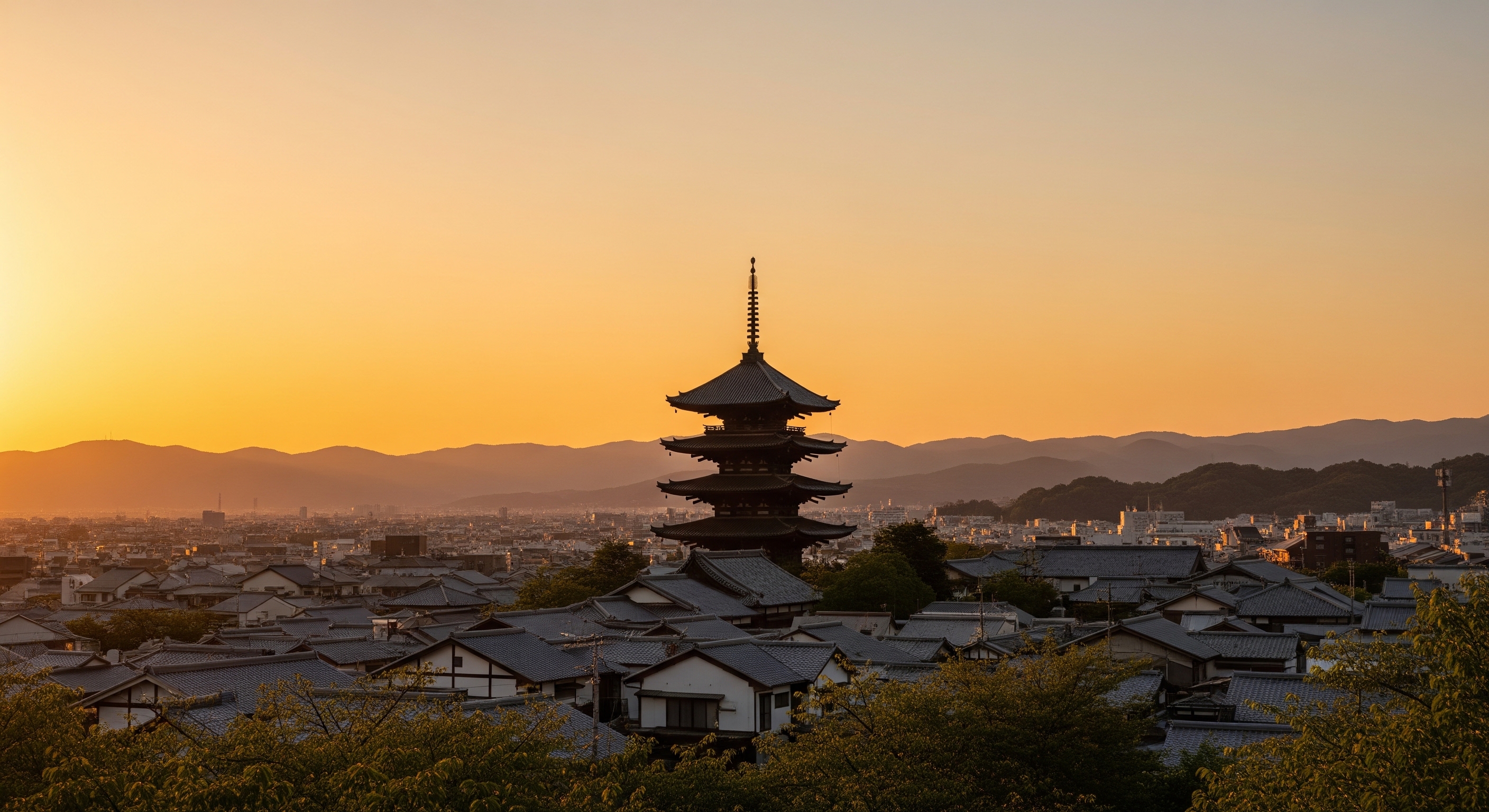
The Perfect 1‑Day Kyoto Itinerary for First‑Timers
A realistic one‑day route hitting Kyoto's essentials: Fushimi Inari, Higashiyama, Gion—timed to beat crowds with transit tips and food stops.
Local guide based in Gion, Kyoto. Leading intimate walking tours and sake experiences since 2018. Passionate about connecting travelers with authentic Kyoto culture.